Posts

Image
The 1929 Stock Market Crash: The FED did nothing and Gold Came up Short By Patrick Eaton For economists and businessmen, financiers and historians, a great debate continues into contemporary times well beyond that sad and tough period known as the great depression. Life saving vanished in a period of flash sell offs and ‘Black Tuesday’ ushered in a period that would see the United States suffer its darkest economic chapter from 1929 until the late 1930’s. The great debate as to the cause of the stock market crash is classic in its form: one group of thinkers believes it was monetary policy (monetarist) while the other group thinks it was demand driven (Keynesian). And of course, a third way (heterodox) has emerged. The heterodox argument is the quintessential catch-all; all the outside arguments that either disagree with the monetarist or Keynesian models.      The New York Stock Exchange Weeks Before the 1929 Collapse. [1] What all thinking agrees upon is the U...
Image
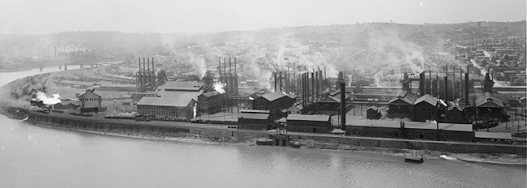
      Duquesne Steel Plant, Carnegie Steel Co., Duquesne, Pa. [1] MAN OF STEEL: ANDREW CARNEGIE   By Patrick Eaton                                                                                                                                               ...

U.S. Iron Ship Building 1860 to 1900: A Comparison between Two Small Shipyards in San Francisco and East Boston

Image
  U.S. Iron Ship Building 1860 to 1900: A Comparison between Two Small Shipyards in San Francisco and East Boston By Patrick R. Eaton The Post-bellum period saw rapid expansion across industries in the United States. Coupled with the great move west and ‘manifest destiny,’ the United States transitioned towards an economy of heavy industry and large-scale manufacturing. Shipbuilding, naturally underwent change between 1865 and 1900. The pre-Civil War era saw shipping production at large and small yards across the West Coast, Great Lakes, Mississippi River, the Gulf Coast and of course, the East Coast. The ships constructed were generally wood and were sail powered. The advent of the combustion engine, use of steam and coal saw technologies from rail applied to ships. Further, ship design underwent radical change and soon hulls were made of both; wood and steel. Traditional Pre-Bellum shipbuilding relied on wood and craftsmen from carpentry trades. This allowed for numerou...

Henrique Maximiano Coelho Netto: A Brazilian Man of Letters, an Educator, Writer, Professor and Abolitionist.

Image
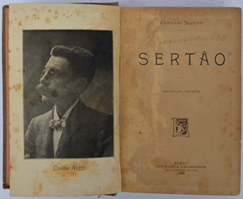
  Henrique Maximiano Coelho Netto (February 21, 1864 – November 28, 1934) was a writer, an educator, a politician, the President of the Brazilian Academy of Letters, and my great grandfather. Known as Coelho Netto, he was born in the north east of Brazil and as a young boy, he moved with his family to Rio de Janeiro. We studied law at the University of Sao Paolo but failed to complete the program. [1] Ultimately, he spent his youth fighting for abolition which did much to sour the Sao Paolo University Law department on any completion or granting of a degree. Henrique Maximiano Coelho Netto (February 21, 1864 – November 28, 1934) was a writer, an educator, a politician, the President of the Brazilian Academy of Letters, and my great grandfather. Known as Coelho Netto, he was born in the north east of Brazil and as a young boy, he moved with his family to Rio de Janeiro. He first studied medicine and failed at that. He then studied law at the University of Sao Paolo ...

"The Catholic Church during the Revolutionary Era"

Image
  The Catholic Church during the Revolutionary Era By P.R. Eaton The story of English Catholics in the new colonies established in North America was one of oppression save for the new colony established in Maryland. The original members of the English colonies established on the East coast of America were primarily Protestants of English and some European stock. Catholics, although numerous among the Irish minorities, were primarily associated with the French colony on Quebec. As such, the Catholics were “oppressed by laws copied from the appalling penal code of England.” [1]             English Catholics, although oppressed across England, feared leaving and pursuing the unknown in the Americas would prohibit their growth and squander what riches they had accrued in their toils. But ambition and duty would compel a number of Catholics to enjoin the efforts underway in the New World. English Catholics would establish settleme...