Posts

The “Great War”, 1914-1918: Democracies and Autocracies
Image
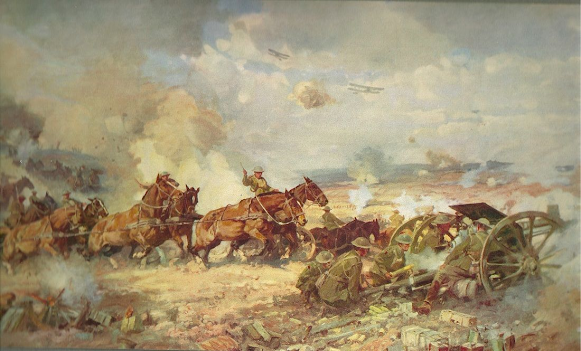
  The “Great War”, 1914-1918: Democracies and Autocracies The “Great War”, 1914-1918, was “the largest and bloodiest war in human history to that time.” (Snow and Drew 2010). The war was fought across the globe from the trenches and fields across Europe to the steppes of Russia, the deserts of the Middle East, and the Atlantic. All over Europe hundreds of thousands of men and women went to work in factories. Manufacturing and industry was pressed into service as this war was the first that included aircraft, submarines, lethal chemicals and machineguns.       Germany, the Austro-Hungarian Empire, the Ottoman Empire and the Kingdom of  Bulgaria  comprised the ‘Quadruple Alliance’ also known as the ‘Central Powers’. The ‘Central  Powers’  were pitted against the Allied Powers, or Triple Entente, from the major nations of  France,  Russia, the United Kingdom and her colonies. Allies were from as far away as New  Zealand  and Hon...

Hypothetical Planning 1943: The Central or Southern Pacific Axis?

Image
  Hypothetical Planning 1943: The Central or Southern Pacific Axis? TASK By 1943 two different viewpoints had emerged on how to win the war.  1.       One, an island-hopping strategy across the Central Pacific, utilizing American air and naval strength and few ground troops, was advocated by Admiral Nimitz.  2.       On the other hand, General Douglas MacArthur believed, mostly for personal reasons, that a drive through the Philippines would be best to bring about the final defeat of Japan.  Select one of the opposing points of view and brief the Commander-In-Chief, President Roosevelt.    INTRODUCTION    The provocative and aggressive actions by Japan in the Far East, necessitates a thorough review and redesign of current war plans. Understanding the requirements of the President with respect to the Atlantic and our key ally, the United Kingdom, a review of the Pacific strategy is proposed in...

The Iran Iraq War 1980-1988: Still Influences the Region Today

Image
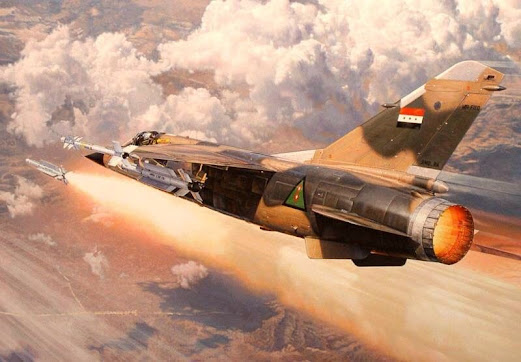
  The Iran Iraq War 1980-1988: Still Influences the Region Today BACKGROUND The Iraqi armed forces invaded Iran on 22 September, 1980. Thus began the most horrific war in the history of Middle East. The war lasted almost eight years and was ultimately terminated on 20 August, 1988. The war saw armored battles, missile attacks against cities, the use of chemical munitions, trench warfare, attacks against merchant shipping and human wave infantry attacks. The cause of the war was two-fold:  Iraq’s expansionist policies combined with a desire for regional dominance politically. Saddam Hussein thought a ‘preemptive’ attack was warranted against the Iranian Islamic Revolutionary regime. The war, outside the orbit of the U.S.-Soviet ‘Cold War’ would impact these two nations and many others as this war had grave consequences on the international petroleum industry and commerce worldwide. At noon on 22 September, 1980, the Iraqi Air Force deployed over 190 combat aircraft across the I...